
The Future Homes & Buildings Standards (FHS) officially mandates low-carbon heating systems be installed in new buildings in the UK from March 2027. This requirement means businesses must adapt quickly if they’re to stay ahead of the policy’s introduction next year.
In this guide, you’ll discover how the FHS affects heat pump installers and get guidance on navigating the changes.
The Future Homes & Buildings Standards officially comes into force in March 2027, marking a major shift in UK government regulations.
This presents many exciting opportunities for heat pump engineers and those looking to expand into the renewables sector, as the industry transitions away from fossil-fuel heating in favour of greener energy solutions.
This guide will explore what the new regulations mean for heat pump installers and provide tips for succeeding in this evolving landscape.

What Are the Future Homes & Buildings Standards?
The Future Homes & Buildings Standards is a set of regulations recently announced by the UK government, aiming to reduce carbon emissions and increase energy efficiency in new homes.
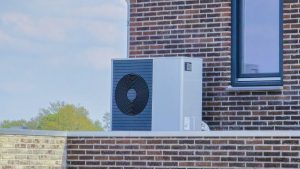
The strategy involves replacing traditional gas boilers with low-carbon technologies like heat pumps and solar PV, alongside defining more rigorous building fabric standards such as triple glazing and enhanced airtightness.
It’s a significant update to the existing Building Regulations 2010, with the law coming into effect on 24th March 2027. A 12-month transition period will follow this to support the industry in adapting to the changes.
This is valuable for projects in progress, helping them to avoid any unnecessary delays. If developers submit their planning application prior to the 24th March 2027, they’ll be able to continue building so long as they start work before the end of the transition period.
It’s important to note that the revised guidelines won’t impact current gas heating systems. Homeowners are still able to maintain and replace them when needed, as the restrictions are designed for new builds only.
Key Changes for Heat Pump Installers
In the wake of incoming regulatory changes and a growing consumer demand for green energy solutions, heat pumps have significantly risen in popularity.
This trend is clear in new figures from the HPA UK, revealing that heat pump sales broke new records at 125,000 units in 2025, where 1 in 3 sold were manufactured in the UK.
Given this surge in demand, it’s helpful to have clear understanding of how the FHS will impact heat pump installers:
- Low-carbon heating: the government is aiming to phase out gas boilers with these standards. This means that heat pumps will likely become the primary heating mechanisms for new homes across the UK.
- Energy performance standards: modern buildings must now emit 75% less emissions on average than 2013 standards under stricter criteria outlined by the government. The Home Energy Model (HEM) is also set to replace the current Standard Assessment Procedure (SAP) for measuring efficiency, providing greater precision and improving compliance.
- System integration: heating systems should be engineered to work seamlessly together from the outset to maximise efficiency and meet higher energy performance standards.
- Technical design: accuracy at the design phase has become critical. For example, installers need to calculate heat loss per room, provide digital evidence, and ensure the system easily connects to the smart grid.
Why the Future Homes & Buildings Standards Matter for Installers
Now that we’ve covered what the FHS is, let’s consider how the new standards will directly impact heat pump installers.
It’s an exciting time for renewables businesses, who have plenty of opportunities to boost profitability with new technologies, attract new talent, and upskill their staff.
However, there’s still lots to navigate before the regulations become law and significantly alter the industry’s landscape:
Market Certainty and Demand
The FHS mandates low-carbon heating in all homes built from 2027, so the demand for heat pump engineers is going to sky-rocket.
This will create a steady, long-term stream of sales opportunities for renewables businesses. Specialising in heat pump installation can increase your chances of securing larger commercial contracts, too, as developers must ensure their projects meet stringent criteria to receive green funding.
Maintaining Compliance
The implementation of the Future Homes & Buildings Standards will make compliance tougher.
Measures like the HEM take effect in the second half of 2027, so quick adaptation is vital for success. You’ll also need to keep detailed commissioning records to ensure adherence, including geotagged photograph evidence and automated BREL reports.
As digital compliance gains prominence, businesses should consider robust solutions like Commusoft. From streamlining workflows with custom digital forms, to improving data collection with powerful analytics tools, our system helps you simplify complex processes.
Future-Proofing Your Business
The FHS signals a firm transition away from traditional gas boilers, meaning adopting renewable technology is now essential if businesses want to stay competitive.
It’s therefore important to focus on upskilling your workforce to guarantee compliance and take on more specialist jobs. Bear in mind that obtaining the necessary qualifications is often a pre-requisite when applying for government schemes like the Smart Export Guarantee (SEG) or the Green Heat Network Fund.
Tips: Discover how to avoid common recruitment and training challenges during the green transition.
Securing Industry Accreditations
If you’re looking to enter the low-carbon heating industry, it’s useful to understand the professional qualifications needed.
Becoming a heat pump installer involves several steps, starting with specific entry criteria required to attend mandatory specialist training programmes.
- Entry Requirements
Before you can undertake heat pump training, you must hold one of the following:
- N/SVQ Level 2 or 3 in heating & plumbing (or an equivalent qualification)
- 2-3 years of experience working on wet central heating systems
Having a valid WRAS water regulations certificate is another prerequisite.
- Professional Training
Once the entry requirements are met, it’s necessary to participate in an accredited Level 3 specialist heat pump course. This typically covers areas such as system design, regulations & safety, maintenance, installation & commissioning.
After you’ve completed this training, the final step is register your business for MCS accreditation. This is essential because it allows your customers to claim government grants, and shows that you meet the correct standards for insurance and quality assurance.
Check out our blog if you’re looking for fresh ways to generate more heat pump leads for your business and download our playbook to make following-up with them easy, too.
Upskilling and Training Your Workforce
The growing demand for heat pumps has created a substantial skills gap in the industry. A cost-effective solution for this is upskilling your existing workforce, which in turn improves employee retention and accelerates productivity.
Follow the steps below to make sure your employees are equipped to perform heat pump installations:
- Obtain Industry certifications: if renewables are a new focus for your business, your engineers might need additional professional training to qualify.
- Support continuing professional development (CPD): don’t forget to prioritise continuous learning so your team stay up-to-date with industry trends, hone their skills, and boost their career progression.
- Internal resources: this could involve building a knowledge database, offering peer-to-peer mentorship programmes, setting dedicated learning time, or running workshops.
Modernising Your Systems and Operations
Managing your operations could become complex following the introduction of the Future Homes & Buildings Standards. Embracing innovative technologies is non-negotiable for modern renewables businesses if they want to stay compliant.
Here’s some smart ways you could streamline your heat pump installations:
Investing in Quality Installation Equipment
Purchasing quality equipment can save you a lot of time in the field and ensure you always deliver service excellence. Whether it’s advanced diagnostic tools like digital manifolds, or specialised system components such as AI-enabled smart controllers, be sure to carry out research to see what’s on offer.
As a heat pump installer, you could also benefit from savvy digital design tools to increase accuracy. From room scanners that calculate a room’s heat loss in moments, to performance simulators that give customers an idea of potential energy savings, leveraging the right technology can simplify complex workflows.
Field Service Management Software
Implementing field service management software is a great opportunity for renewables businesses to stand out from the crowd.
Commusoft’s powerful software is built to scale, supporting your business’ growth in the long-term. Every record related to customers, jobs, and engineers is seamlessly connected in an all-in-one system.
Our solution is designed to save you time and boost your efficiency by:
- Simplifying compliance with custom digital forms for every service you offer
- Streamlining service contract management with automated PPM scheduling, SLA monitoring and digital invoicing
- Closely tracking service performance with an enhanced analytics suite
- Using integrated estimating & quoting tools to build sleek, professional bids
Scaling Your Renewables Business
You’ll now be equipped with useful information that’ll help your business succeed when the new building regulations are introduced in March 2027.
Book a call with our sales team if you’re interested in levelling up your business with Commusoft’s field service software.
Our solution is specifically designed for the trades, allowing you to increase productivity with innovative features and intuitive workflows.
You can also download our handy heat pump proposal template designed to turn more prospects into paying customers.




 English (United States)
  English (UK)