
When you hear the phrase annual recurring revenue (ARR), you might think of long-term subscriptions, or preventive maintenance plans. But have you ever stopped to consider the benefits it could bring to your business?
Whether it’s increased financial stability, predictable profit, or better scheduling, growing your ARR can turn slow periods into a steady stream of work. Join us to discover how you can capitalize on this…
These days, you can get a subscription for just about anything, but not every trades business is making the most of these valuable opportunities.
While there are plumbing, heating, and electrical businesses who offer regular maintenance plans to cover boilers, heat pumps, or EV stations, managing annual recurring revenue can be another story.
Below, we’ll explore how you can streamline workflows to accommodate additional sources of income, and use them to create a stronger business.

What is Annual Recurring Revenue?
Annual recurring revenue (also known as ARR), is the guaranteed, continuous income that your business turns over every year. Earnings like this are usually the result of a contract-based service agreement between a business and its customer.
This type of income, alongside monthly recurring revenue (MRR), can provide greater financial stability. It makes it clear how much is coming into your business, and when.
ARR relies on regular income generated by your loyal customer base, so it’s all about a building secure, sustainable operation that benefit both employees and customers alike.
What Types of Recurring Revenue are there?
Recurring revenue could come to your business in a few different ways. Some methods are easily predictable, while others may require a bit more effort to put in place.
Service Reminders
While a service reminder itself is not a direct source of recurring revenue, it can help you get it.
It’s a notice (usually an email, letter or SMS) sent to a customer to let them know that a particular service is due. These appointments are usually for regular maintenance of a particular asset a customer has installed.
If you’re using software, like Commusoft, a service reminder can be sent out automatically, saving you time.
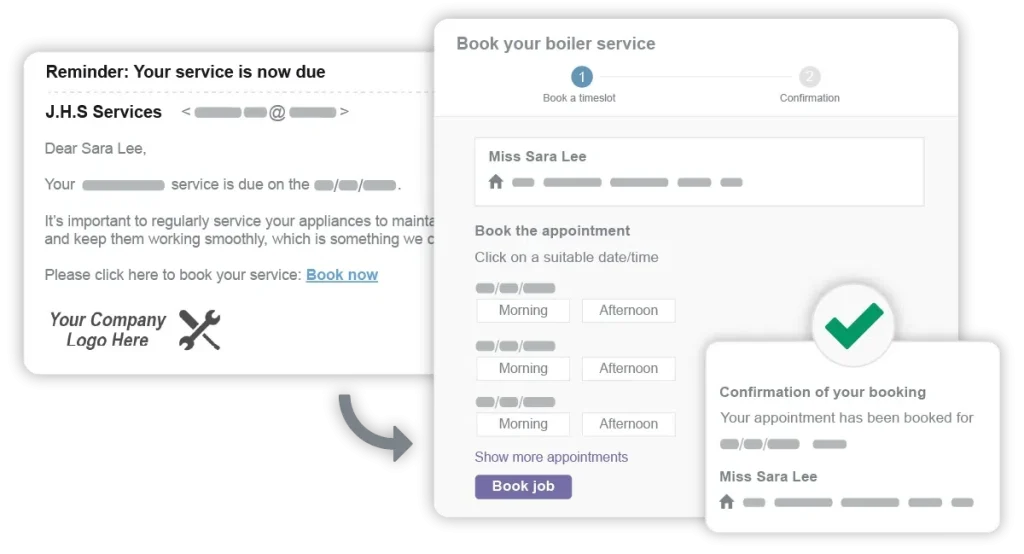
By sending alerts at the right time and highlighting the cost, you give customers a subtle prompt to get booked in. If they have equipment that needs to be assessed yearly, automated communications are a simple means of winning repeat business.
But compared to contracted work, they aren’t necessarily a guaranteed source of income…
Service Contracts
A service contract, sometimes known as a maintenance agreement, is a binding arrangement between your business and a customer.
They typically outline the terms and conditions of the service you provide and will state the annual and/or monthly cost a client pays for these services.
A simple contract, for example, could cover a boiler service for a homeowner. Rather than manually pitching to clients every year (as with the reminders we mentioned above), clients would already be covered under the terms of their plan.
You might also manage larger, high-value commercial contracts. Though similar in scope, their scale (both for work and financially) will be greater than a home service plan.
That being said, having any customer sign a long-term agreement paints a much better picture for growing your annual recurring revenue.
Take a look! Try our service reminder calculator to see how much you could make.
The Challenges of Offering a Subscription-Based Service
While there’s many benefits to building your annual recurring revenue, businesses might face challenges in implementing and maintaining a successful subscription model.
So that you can better understand how software can support you, let’s take a look at some challenges you may face:
1. Difficulty Managing Volume
As the number of clients with contracts grows, so does the complexity of coordinating. It requires having efficient systems and processes in place to deliver a seamless experience.
Implementing customer relationship management tools become crucial to avoid operational bottlenecks and maintain service quality.
2. Acquiring and Retaining Customers
Subscription businesses thrive on customer loyalty. However, acquiring new subscribers and keeping existing ones around often presents difficulties.
Balancing acquisition costs with revenue should be one of the first calculations you do to maximize profitability.
3. Finding the Right Price
If your goal is to attract potential customers, you may decide to undercut your competitors. But it’s never a good idea to undervalue your services, which will only kick off a race to bottom.
No matter what, the price must cover your operational costs to increase your chances of turning a profit. At the same time, keep in mind that reasonable pricing and a clear scope of work are important ways of winning repeat business.
When customers perceive the cost to be fair compared to the benefits offered, they are more likely to be satisfied and proceed with the purchase.
Simon Kucher
It’s by leveraging technology that you can take the pain out of solving these problems and meet customers evolving needs and expectations:
63% of consumers prefer to find information about brands and products on mobile devices.
Hubspot
Three Reasons Why Annual Recurring Revenue Is Important
Now we’ve covered common challenges you might encounter with offering subscription-based services, we’ll explore three core reasons why focusing on ARR is a smart move:
1. Yearly Forecasting
Unlike one-off transactions, ARR provides a predictable flow of work. This gives you the ability to forecast your yearly income, and subsequently create more accurate projections, plan budgets, and allocate resources better.
And when you use software to manage information — from individual jobs to service contracts — you can plan with an even higher degree of precision.
2. Performance Tracking
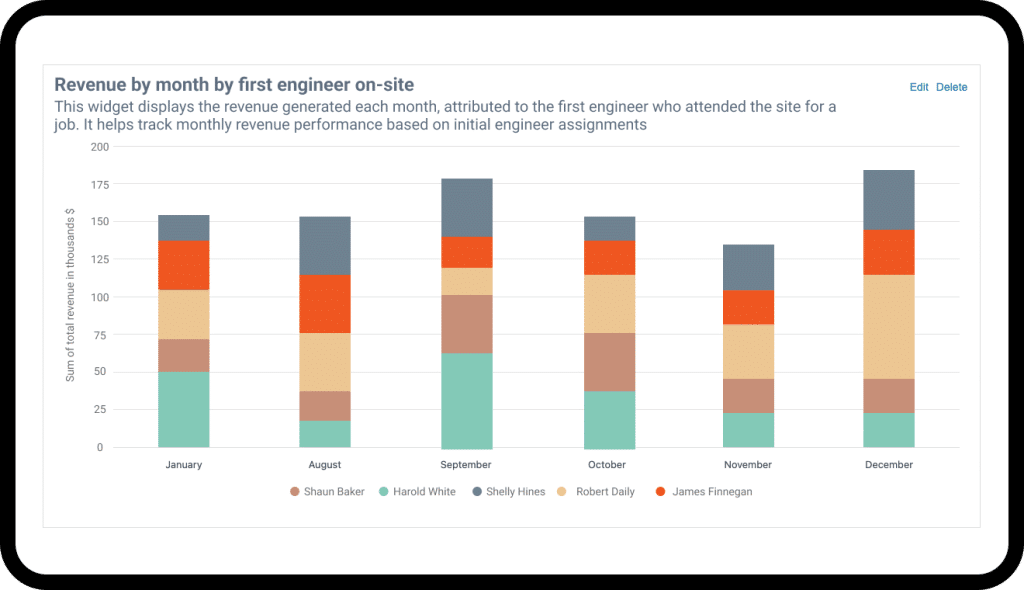
Tracking your annual recurring revenue means you can gauge the success of your services, identify trends in customer acquisition, and focus on boosting retention.
Adopting a data-driven approach also empowers your business to make strategic decisions about its revenue growth.
For example, if you notice that yearly payments have plateaued, you could decide to start a new expansion campaign whose goal is to attract new clients to your business.
3. Peace of Mind
Signing a contract to cover a particular service gives customers peace of mind that their asset is taken care of. They’re able to rest easier knowing they won’t have to spend time or energy thinking about what to do, especially in an emergency.
Not only that, but similarly to your business, a customer can manage their own budget easier. That’s all thanks to a clear breakdown of the monthly or annual service fee that you charge.
For your business, it’s guaranteed money in the bank. This relieves the pressure of wondering how much income you’ll generate each month, or across the year. From there, you can plan ahead for slower periods, and comfortably navigate unexpected economic issues.
How Do I Manage Recurring Revenue?
With software for support, calculating and managing annual recurring revenue is a straightforward process.
For calculations, it’s as simple as using your tools to report on income collected from active customers. You can then check for annual and monthly returns and filter for different forms of revenue.
As far as overseeing subscription payments goes, software once again proves invaluable, particularly with a comprehensive database at hand.
Leveraging a Customer Database
A well-organized customer database is a powerful solution for field service businesses, not only to retain clients but also to discover new opportunities to acquire customers. By systematically managing client information, businesses can identify their most profitable customers, track service histories, and personalize interactions.
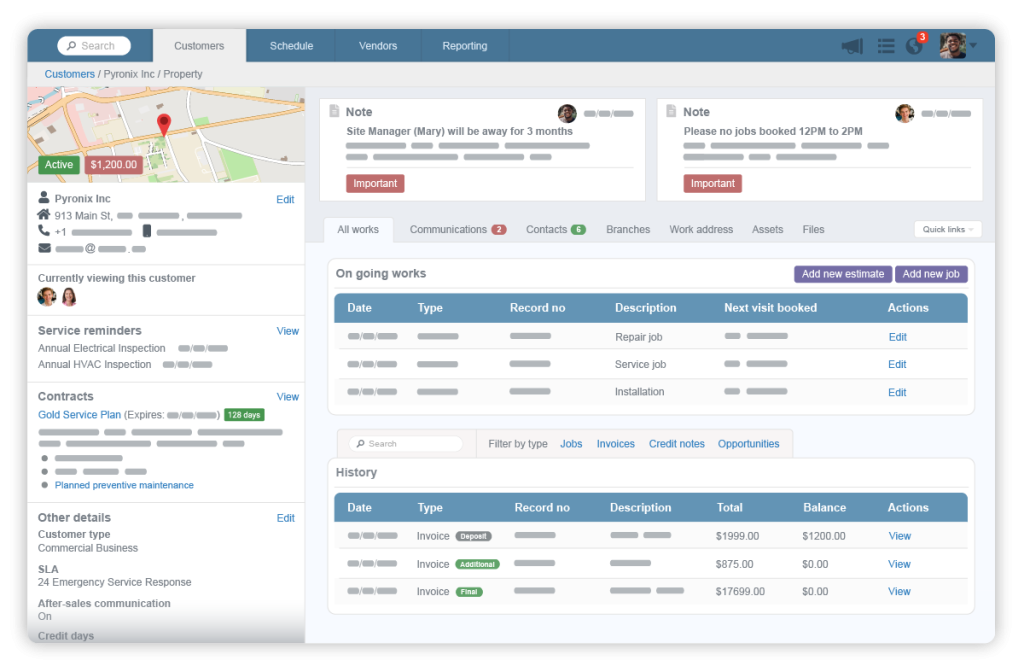
This data-driven approach allows you to anticipate customer needs, deliver an exceptional service, and ensure long-term loyalty.
Additionally, an accessible database streamlines communication across teams, improving organization and reducing errors. Automated service reminders or targeted upgrades based on customer history can further increase retention.
Accounting Integrations are Essential
Using software with robust accounting and payment solutions is essential for streamlining your operations. For instance, Commusoft’s integrations with platforms like Stripe and GoCardless help you get paid faster and allow you to manage your finances seamlessly.
Renewing contracts also becomes an effortless process with accounting software, eliminating friction and making it easier for customers to commit to long-term spending.
Offering these modern, intuitive tools not simplifies workflows and enhances the customer experience. Plus, prioritizing convenience and ease enables you to impress today’s tech-savvy customers.
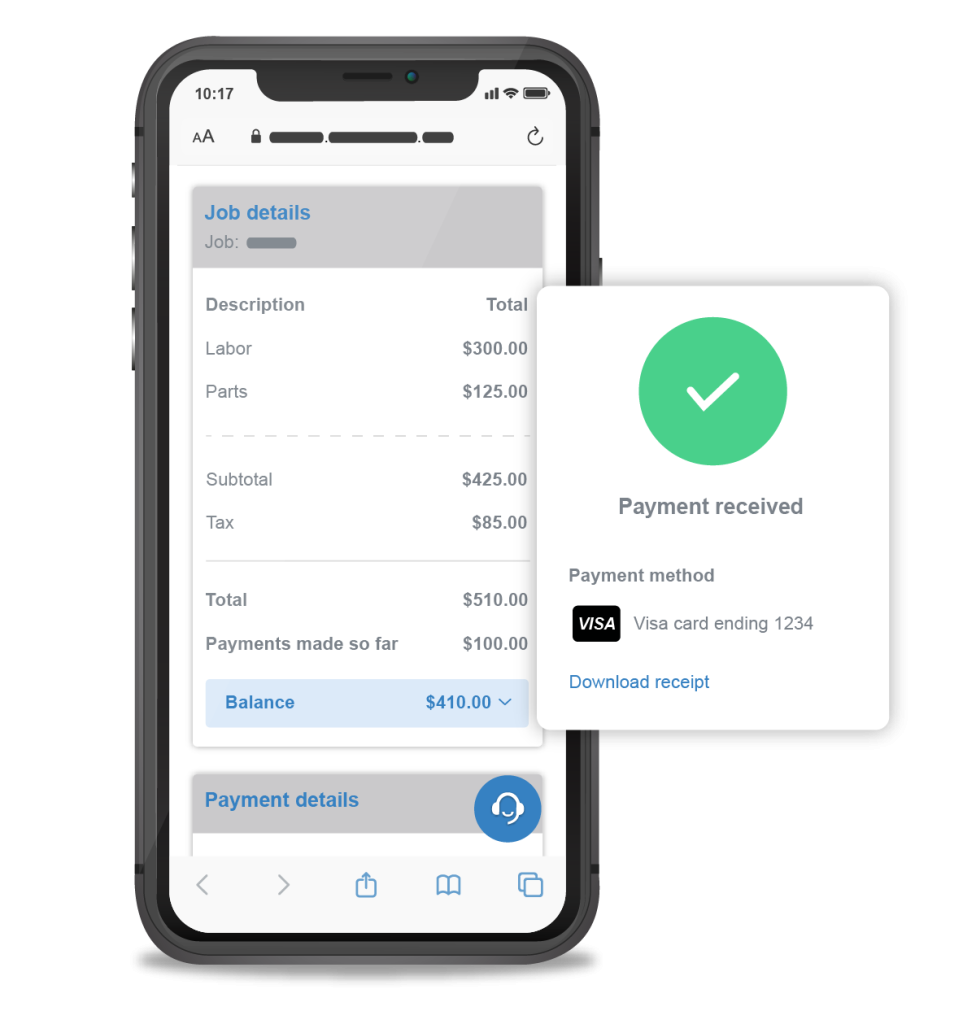
One of our clients expressed their delight at the efficiency of Commusoft’s invoicing software for organizing their contracts:
We’ve got about 700 properties on [contracts] cover with us at the moment: without the Contracts feature, we wouldn’t be able to run it. The feature makes it a lot easier, especially with invoicing, collecting payments, marking a job as done. We don’t have to worry about it: the system makes things a lot more streamlined.
Paul Deadmon, Operations Manager, CS Heating & Plumbing
Making the Most of Every Type of Job
Depending on the services you offer, your profit margins can fluctuate between high, medium and low service jobs. Other factors, like offering a discount, may also impact profitability.
At the end of the day, there’s no such thing as bad profit. Just that the amount earned on a job can vary greatly.
Inevitably, this will make some jobs more attractive to accept than others. For instance, a full-scale heat pump fitting will earn you more money than its annual check-up, so it makes financial sense to prioritize these high-profit jobs.
However, with a job management system helping you optimize scheduling, you’ll find ways to fit in more jobs with less effort.
Using Commusoft to Manage Recurring Revenue
Commusoft enables field service businesses to streamline operations from top to bottom. Here’s a glimpse into how our powerful job management software simplifies the way you manage recurring revenue:
- Automated invoicing and payments: We can eliminate manual billing and even send invoices automatically based on contract terms. This way, you can ensure payments are on time and predict cash flow.
- Flawless customer management: Easily consolidate all customer information – including contact details, service history, and payment records, in a centralized location. This means your technicians can always access the customer information they need while in the field!
- Detailed reporting: Gain valuable insights into your recurring revenue performance with insightful reports. Track key metrics like customer acquisition cost, churn rate, and average revenue. Then use these insights to identify areas for improvement and optimize your subscription model for long-term success.
With Commusoft, field service businesses can effortlessly grow their additional income streams, and optimize their service delivery. Get started today by reaching out to us or clicking the banner below!






 English (United States)
  English (UK)