Key Takeaways
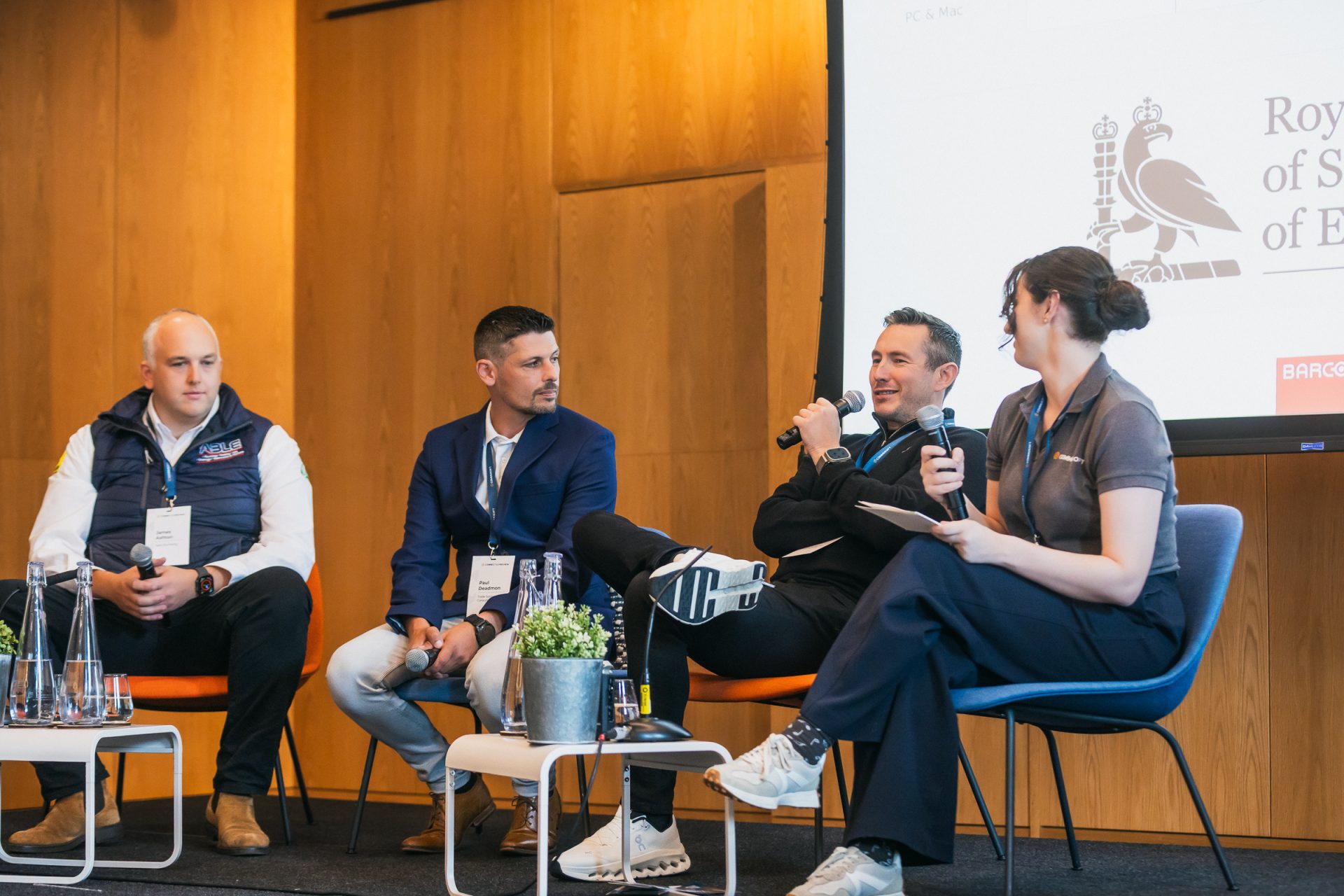
- At our flagship event, Connect & Preview, we were joined by a panel of experts who shared insights into a key challenge faced by trades business owners: how to ensure engineers use your FSM software properly.
- Discover their top tips on how to successfully get your engineers on board with using FSM software so you can maximise team productivity.
- Also learn about the common reasons why software implementation often fails, and how you can prevent them.
Commusoft were delighted to host a fireside chat at our flagship event in London, Connect & Preview 2026. It was a relaxed conversation that gave attendees a real insight into topics valuable to them, ranging from software implementation and engineer adoption, to the time-saving power of service reminders.
The focus of this blog is about how to get engineers on board with using FSM software when you experience resistance to change. It’s a common sentiment, and our panel of experts looked at how trades owners can achieve this without it feeling like a constant struggle, including tips for customising your software, automating processes, and utilising dedicated mobile apps.
Alongside this, we’ll explore common reasons why software implementation fails, and delve deeper into why securing engineer buy-in is critical for success.

Introducing Our Panel of Experts
Before we dive into the topic at hand, let’s first introduce you to our panel. They have decades of experience between them of working in the plumbing, heating and service industry, and each bring a unique perspective into how to make processes simpler so busy teams can thrive:
Phil Clarke, PCL
Phil Clarke joined us from PCL in the Lake District, which he has been running for nearly 25 years. He was one of Commusoft’s first clients back in 2011 and has grown alongside us, with his business going from trading out of the back of a Ford Escort to a multi-million pound operation.
Most recently, Phil and his team have delivered the full M&E contract for Guy Martin’s “House Without Bills” on Channel Four, transforming a property into a completely Net Zero home.
Paul Deadmon, Trade Systems Consultancy
Paul Deadmon brings over two decades of hands-on plumbing and heating experience. As the founder of Trade Systems Consultancy, Paul works directly with trades businesses to strip out operational chaos and build workflows that run smoothly.
His philosophy centres on ensuring businesses are using the fundamentals of their system first before layering on advanced features. Often, he sees the most powerful improvements come from lots of small changes working together rather than one big change.
James Ashton, Able Plumbing
Completing our panel was James Ashton from Able Plumbing. Over the years, James and his team have driven incredible growth for their company. Quadrupling revenue while only doubling headcount is just one example of this. Able Plumbing has built a business that perfectly balances trade knowledge with strong foundational systems.
Now we’ve introduced our panel, let’s explore why investing in new software solutions creates challenges for growing trades businesses, and steps you can take to resolve this.
Why Implementing Software Often Fails
Ensuring engineers use FSM software is a daily struggle for trades business owners, with common reasons including resistance to change, frustration at clunky processes, or an increased admin burden that eats into other activities.
Here’s what our panel of experts said about where businesses go wrong when introducing new tech:
You Haven’t Allocated Enough Time or Resources
It’s vital to allocate enough time and resources when you’re first setting up the system, otherwise it’s going to cause problems further down the line. Paul explained why this is a common challenge for growing trades businesses:
You’ll quite happily make sure that your staff are ringing around for services and quote follow-ups, but if you’re not allocating them time to do implementations, then it’s never going to be done.
Implementing software can take some time because it involves rigorous testing, data cleaning, and quality control. But getting this right early on means that your software will function properly for your team’s needs, and become an integral part of everyday operations.
You Find it Too Complicated to Use
While field service management software is a powerful tool that can help your business save you time, money and resources, its features can feel a little daunting.
The problem with it not being basic is that it’s got much more capability. But in order to then use that capability, you’ve really got to do a deep dive and work out what you want from it.
Phil Clarke
Commusoft provides detailed onboarding for new clients, incorporating personalised training, support channels, follow-up sessions, and access to a dedicated help centre. This ensures you understand how the system works and can confidently navigate your way around it.
You Don’t Use the Software Consistently
Another reason why software solutions fail is because they’re not fully utilised by the team. Once the initial excitement of having new tech has worn off, engineers may default back to their established workflows because it’s easier.
We have so many different types of software, and I don’t think I open half of them these days. I think implementing it into your daily routine would be another thing to add.
Phil Clarke
Encouraging engineers to use the software every day will increase their familiarity with it, build proficiency, and remove any initial friction. Eventually, you’ll no longer need to remind them to do this, as it will become a natural part of their everyday routine.
Why Securing Engineer Buy-In is Crucial for Success
Your engineers spend the majority of their time out in the field and need tools they can actually trust to access information instantly, capture data accurately, and complete their work to a high standard.
Let’s explore some key reasons why securing engineer buy-in is critical for making your software succeed:
- Boosts customer satisfaction: Not only is winning your engineers over important, but also your end user. When engineers use the software properly, customers can benefit from automated ETA updates, higher first-time fix rates, and faster job turnarounds.
- Improves confidence in the system: If engineers can navigate the platform seamlessly, they’re far more likely to use it consistently and realise its full value. An added bonus is that mistakes are less likely to occur, and that information doesn’t go missing because it’s been written down haphazardly.
- Increases your ROI: Implementing new software is a massive investment for growing trades businesses, which is why achieving high adoption rates amongst your engineers is crucial. This way, it prevents the system from becoming an expensive, underused tool.
- Maximises team productivity: The right FSM software should increase your daily output by fostering better team collaboration, streamlining workflows, and automating repetitive admin tasks.
Getting Your Engineers On Board with Using FSM Software
Now we’ve covered why getting engineers on board is essential for maximising your software’s value, let’s take a look at what measures you can take to ensure this happens:
1. Explain the Importance of Following Set Procedures
Following stringent procedures is a key priority for plumbing, heating and gas companies, whether it’s gas safety verification, unsafe situations protocols, or creating gas safety records.
Reinforcing this point to your engineers ensures they know the reason why these checks are carried out. Phil Clarke spoke about how this process begins with education:
I think trying to educate the engineers so they can understand what’s downstream from them, and that this information is vital for producing invoices, and keeping the cash flow coming in.
Not only should operations managers emphasise why it’s important to follow procedures correctly, but also the wider impact for the business of deviating from this.
They need to understand the implications that are there when they’re not filling out their Commusoft properly. If they’re not accepting travel and arriving at the right times, then let them know the implications that has.
Paul Deadmon
Don’t be afraid to involve different teams in the process, too, as this helps to promote knowledge sharing and better team collaboration. Paul discussed how this might work in practice:
“One of the great ways to actually get them to understand it better is to get them to spend time with your office staff. Get them in, get them to spend time with an individual person in the office, whether it be accounts or the service manager.”
Another great way of understanding key pain points experienced by engineers is by encouraging your office team to go out into the field. They can then see first-hand why there’s resistance to change, and how they can adapt processes to resolve this.
We think from an office, ‘oh, well that works. Why isn’t it happening?’ Going out and actually seeing it on the other side, you’re seeing the bits that don’t work for them.
James Ashton
2. Automate Processes to Save Time
Clunky, time-consuming processes are major factors behind why engineers are reluctant to use software solutions. That’s when automation can be a game-changer, cutting down travel time, eliminating guesswork, and reducing admin workloads.
James Ashton talked about how his team use Commusoft’s intelligent scheduling feature to optimise their diary management and make life easier for their engineers:
We’re based in Milton Keynes, so if we’ve got an engineer based in Towcester, our engineer that lives in Towcester is pretty much always going to be the first suggested appointment because he’s going to try and put it at the beginning or the end of the day, to then minimise travel.
Comusoft’s intelligent scheduling engine was built for easy use, and works by analysing your team’s calendar to find the most suitable gap. The software takes into consideration shift patterns, skill requirements, service windows, and any impact on existing appointments.
Once this is done, your team simply reviews the suggested user, route, travel distance, and estimated travel time before quickly scheduling the service. This guarantees engineers are only sent to jobs they are qualified to handle, without disrupting their day. James Ashton explained how this has been beneficial for his team:
If you’re booking a job and the customer’s flexible on the days, instead of booking it on Tuesday, which is going to take someone 20 minutes out of their way, when on Thursday we’ve got a guy on that street.
With smart tools like this in place, engineers spend far less time in traffic and more time finishing their work on schedule. Instead of being dispatched to jobs with little context, they can benefit from realistic routes that leave them free to focus on completing jobs.

3. Customise the Software to Suit Your Team
Customising your software to suit your team’s unique dynamics is a great way of boosting adoption. This might entail creating trade-specific checklists, removing redundant workflows, or involving engineers in the design process.
Keeping an open dialogue with your engineers is crucial to achieving this, so you can uncover the key challenges they experience out in the field and resolve them promptly. James shared an example of when his team encountered this exact issue:
We brought in our arrival questions when COVID happened about doing checks. We just hadn’t even thought about it, but they were still answering those questions four years later.
Able Plumbing tackled this using Commusoft’s digital forms software, tailoring job arrival and departure questions based on the specific work being carried out. This prevented engineers from having to complete irrelevant questions before moving on to the next task.
None of this would have succeeded without a thorough onboarding process, ensuring the initial setup saved engineers time rather than adding to their heavy workloads.
We spent quite a lot of time when we set up Commusoft putting the right skills categories so that we can really fine-tune the job descriptions against the skills.
James Ashton

4. Use a Dedicated Mobile App to Improve Team Communication
Constantly phoning the office for updates is a frequent occurrence when engineers don’t have access to the information they need in real-time, and one that causes frustration. That’s why it’s useful to highlight how their field service mobile app is designed to solve this exact issue, providing them with the details they need in just a few clicks.
James Ashton reflected on how a lack of information negatively impacted morale in their workplace:
We used to have, going back to the calendar we spoke about, the engineers would ring the office and say, ‘I’ve got this issue. What was the issue last year?’ or, ‘I can’t find this out.’
Not having sufficient information for carrying out work can directly impact the end-customer, too, such as causing unnecessary service delays. But with the right tools in place, these issues can be resolved before they escalate into major problems.
Now they can go and look at previous property history and see everything that’s been done. It doesn’t rely on that constant communication back and forth. They can just see it all for themselves.
James Ashton
Commusoft’s mobile app is built specifically for the trades, guiding engineers seamlessly through their tasks with structured workflows. You can even set up mandatory steps which must be completed before work can be marked as completed, making sure nothing is ever missed.
This data flows straight back to the office following job completion, eliminating manual entry and providing precise labour costs for every job. Emphasising to your team how the app will make their lives easier by removing unnecessary admin is a fantastic method of increasing usage.
Phil Clarke spoke about how Commusoft’s app has proven successful for his team:
There’s so much time saved between people calling each other. It’s all just directly in one place and easy to access. So, I think for us, it’s efficiency more than anything else.

Maximise Team Productivity with Commusoft
You’ll now have a clearer understanding of effective methods for encouraging engineers to use your software more. After all, solutions like Comusoft are intended to benefit their role and allow them to work smarter, not harder.
If you’re interested in finding out how our powerful all-in-one software can transform how your team operates, get in touch with our friendly sales teams today!







 English (United States)
 English (UK)