
Choosing the best HVAC software is essential for growing commercial businesses, helping you optimize daily processes and maintain excellent service standards.
Whether you’re managing multi-site assets, scheduling routine maintenance, or monitoring SLAs, the right software can provide the infrastructure to support long-term, sustained growth.
If your current system is creating operational issues, or you’re evaluating more advanced tools, this guide is here to help.
By using HVAC software tools, businesses can utilize a range of features that promote growth, including custom reports, analytics and job dashboards. Managing complex service contracts also becomes easy, as an integrated system takes care of everything from SLAs and PPM, to invoicing and contract renewals.
Below, we cover its key features and compare the best HVAC software solutions.

Introduction to the HVAC Industry
As an HVAC business owner, understanding the current industry landscape is important so you’re aware of the latest trends, challenges, and opportunities.
HVAC (heating, ventilation, and air conditioning) businesses carry out work on a range of systems, including air conditioning units, boilers, and heat pumps. Common services they provide are installation, routine maintenance, and emergency repairs, and their diverse clients span the residential, commercial and industrial sectors.
The HVAC industry is a complex and competitive market, with manual data entry and inefficient scheduling key challenges faced by growing service businesses. And when responsibilities and workflows aren’t clear, tracking job progress and responding to customer enquiries is time-consuming and challenging.
These businesses must also contend with increasing competition, changing regulations and rising customer expectations. Industry publications like ACHR News are a good resource to stay informed of the latest trends.
This is where all-in-one solutions like HVAC field service software come in handy, offering a range of tools that streamline daily operations and improve customer satisfaction.
Why Choosing the Right HVAC Software Matters
Residential-focused tools can lack depth in contract management and features like multi-site asset tracking and billable hourly rates, creating workflow issues. This can increase administrative workload and damage client relationships.
Deploying field service management software that’s not built for the complexities of commercial HVAC work causes delays and results in missed maintenance visits. Choosing the right solution is crucial for managing your service contracts accurately, whether it’s invoicing, PPMs or SLAs.
Here’s some important considerations when looking for the best HVAC Software:
- Assess your needs: Identify operational inefficiencies and must-have features.
- Compare solutions: Focus on scalability, asset management, and capabilities. Research different options to understand their features, job scheduling flexibility, and overall customer experience.
- Evaluate scalability: Ensure the software supports your growth.
- Check reviews: Read testimonials from businesses similar to yours.
- Request demos: Test software to ensure alignment with business workflows.
- Evaluate customer support: Choose a vendor with proven expertise in commercial HVAC operations.
Key Features to Look For in HVAC Software
To grow your business, you’ll need software with advanced capabilities to administer large, complex commercial contract effectively. Core features found in the best HVAC software solutions incorporate:
1. Job Management
Implementing HVAC business software is invaluable for scaling your business sustainably, handling increasing job volumes and asset tracking without straining resources.
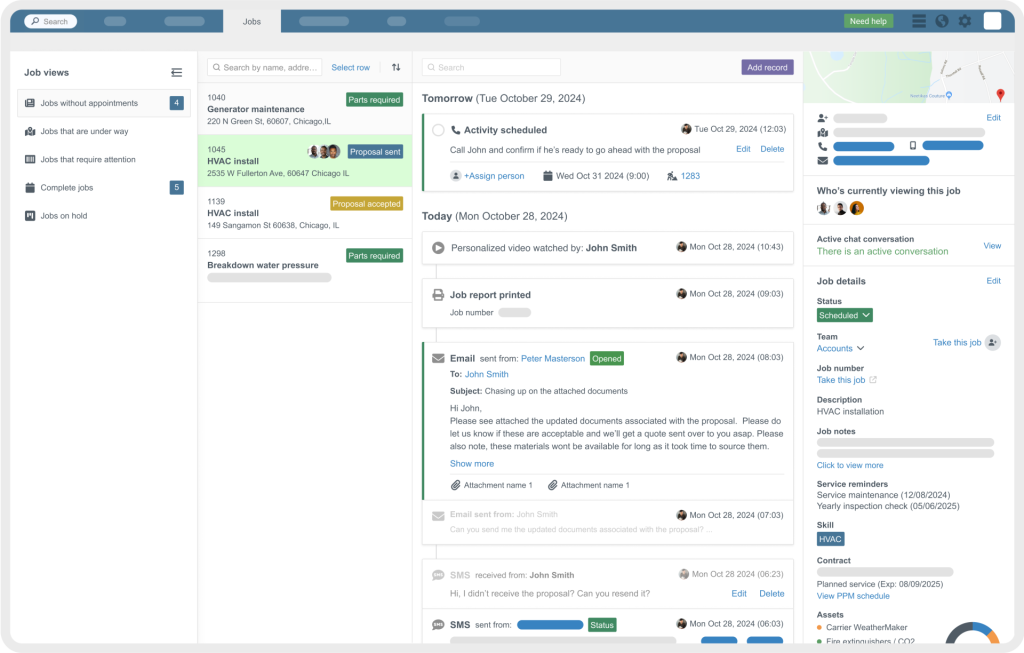
Monitoring the progress of service jobs from initial sales proposal to completion is made easy with an all-in-one job dashboard. The software should provide real-time job updates, customizable workflows, and total visibility for both field technicians and office staff.
Additional features like fleet management software improve your team’s productivity, so you’re able to closely monitor and optimize their performance improve service delivery across your projects.
2. Scheduling and Dispatch
Effective scheduling in commercial operations usually involves coordinating multiple maintenance jobs and urgent repairs at the same site on the same day. Integrating job scheduling functionalities with your calendar integrations guarantees teams are on the same page.
Dispatch is simpler with intelligent scheduling tools, which takes into account factors like skillset, location, shift patterns and availability to select the best matched technician for the job. This gives you peace of mind that technicians are equipped with the necessary skills to complete the service accurately every time.
3. Service Contract Management Software
Retaining commercial clients is important for fledgeling service businesses, who can have higher customer expectations and complex requirements.
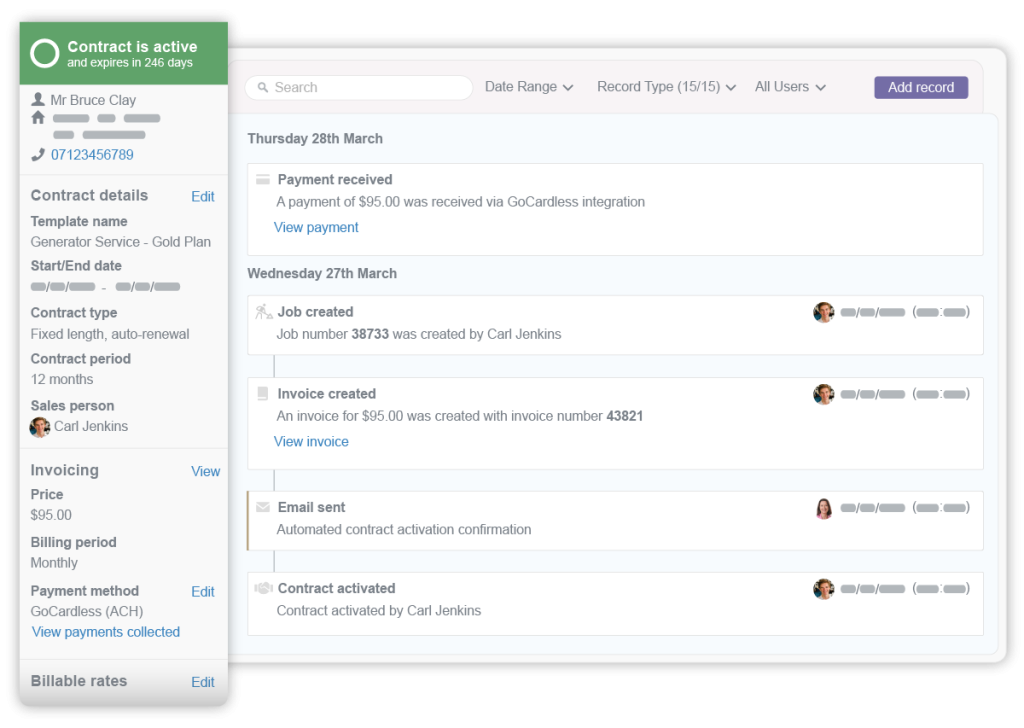
Service contract management software is a must-have feature for simplifying your contract agreements, where you can automate PPM schedules, closely monitor SLAs, and track job profitability.
Check that the software has custom workflows, too, allowing you to accommodate specific client requirements or multi-property contracts without disrupting your daily operations. Implementing a robust system with this functionality protects your revenue streams and reduces the likelihood of missed visits.
Don’t forget: read our commercial maintenance contracts guide for our tips on how to impress your customers!
4. Asset Tracking
Robust asset management software seamlessly tracks service history and asset condition across multiple sites to prevent equipment failures and optimize your maintenance schedules.
Having this in place guarantees technicians arrive on-site fully prepared and can easily locate the asset, reducing any downtime. Meeting compliance requirements also requires no fuss, as all equipment information is logged and accessible on your system.
And when a technician identifies an issue outside the scope of the work, this can be recorded against the asset in a few clicks on their mobile device. These details are then reviewed by your office team and if customers give approval, you’ve secured additional revenue for your business.
5. Mobile Capabilities
Field service mobile apps are beneficial for technicians, offering a user-friendly platform where they can access job details, fill out inspection forms, and track parts usage seamlessly. Offline capabilities are ideal when a technician loses signal, with information automatically syncing when they are back online.
You’re able to create mandatory on-site tasks for your technicians too, ensuring they keep on track with their objectives and accurately record job details. This provides reassurance that nothing is missed and creates a solid audit trail for compliance purposes.
6. Invoicing and Payment Processing
The best HVAC software should make billing hassle-free for you and your clients, normally giving you the option to integrate with accounting solutions like GoCardless and Stripe to streamline the process.
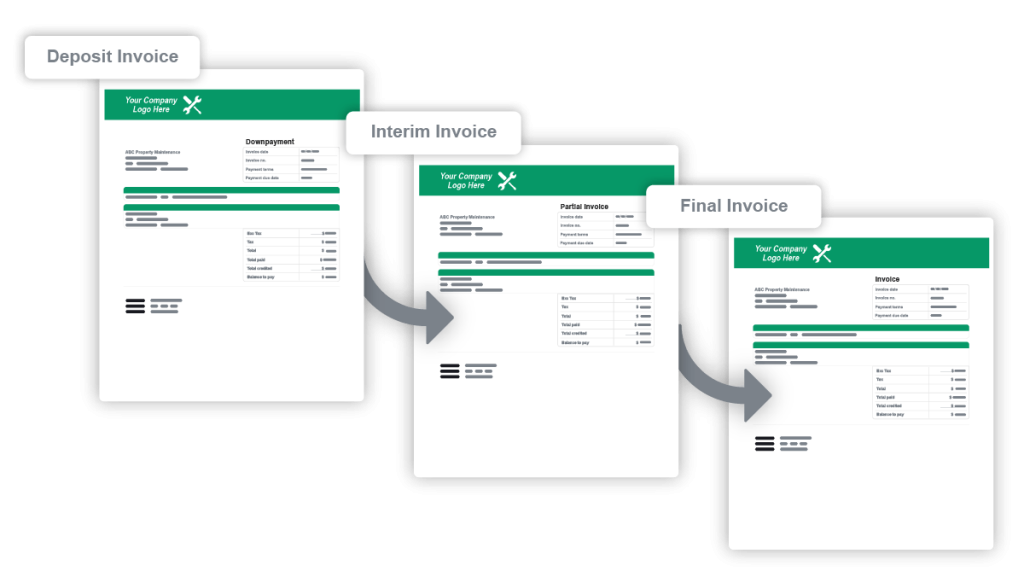
A tight control on your finances is non-negotiable for growing HVAC businesses, especially when it comes to managing complex contracts. Core features like automated invoicing allow you to confidently secure revenue, while a dedicated online portal enables customers to view, download and pay invoices at their convenience.
Top Commercial HVAC Software Solutions
There’s lots of software choices on the market, so it’s useful to learn their key differences. You’ll want to take time assessing your options, carefully weighing the pros and cons to make an informed decision.
Below is a quick comparison of some of the best HVAC software in the commercial space:
Commusoft
Overview:
Commusoft is designed for multi-trade, contract-driven commercial services, delivering targeted tools to manage multi-site assets, automate maintenance schedules, and simplify contract management.
It offers extensive asset management, PPM automation, customizable workflows, and strong reporting capabilities, reducing admin time by 30% and missed service visits by 50%. It’s perfect for HVAC businesses scaling looking to scale, whether you manage 10 contracts or 10,000.
Commusoft excels in customer relationship management (CRM), enhancing client interactions and overall business efficiency. Its effective CRM capabilities allow field technicians and managers to access crucial customer data, schedule appointments, and organize invoicing, driving customer satisfaction and improving profitability.
What makes us special:
- Workflow customization for complex commercial contracts
- Offline-capable mobile apps for field technicians
- Advanced asset tracking for equipment across multiple locations
- Rated 4.7 stars on Capterra with excellent customer support.
SimPRO
Overview:
SimPRO stands out for its project management and financial reporting tools, making it a great solution for construction-heavy or enterprise-level contractors.
Strengths:
- Advanced budgeting and forecasting features
- SimPRO’s financial reporting tools provide real-time job costing insights on labor, materials, and profit margins, enabling HVAC companies to accurately bid jobs and meet revenue targets
- Multi-company structures are supported
Weaknesses:
- A complex UI that many office staff find difficult to use
- Lengthy onboarding process compared to competitors
Housecall Pro
Overview:
User-friendly and cost-effective, Housecall Pro is designed for small residential service teams, emphasizing how efficient job scheduling and management enhances your customer service and boosts profitability. However, it lacks the advanced features needed for commercial HVAC operations.
Strengths:
- User-friendly interface
- AI-enhanced dispatching and invoicing tools
Weaknesses:
- Limited asset tracking and PPM capabilities
- Not suitable for multi-site operations
BuildOps
Overview:
BuildOps is designed exclusively for large-scale commercial projects, excelling in managing construction jobs by optimizing project management and resource allocation. This, alongside its AI-driven features, help users identify risks, track costs, and win profitable projects through detailed job insights.
Strengths:
- Advanced asset tracking and dispatching
- Tailored for large-scale projects
Weaknesses:
- High cost makes it less accessible to mid-sized businesses
- Complex implementation process can extend onboarding time
Drive Operational Efficiency with Commusoft
Finding the best HVAC software isn’t just about solving immediate operational challenges, it’s about building the infrastructure for scalable growth.
Commusoft provides a strategic combination of asset management, workflow customization, and contract-driven operations tailored to commercial HVAC firms.
Are you ready to explore how Commusoft can elevate your business operations? Book a demo today and experience the impact firsthand.







 English (United States)
  English (UK)